
Editorial mar caribe
Open Science in Latin America and the Caribbean
Open Science in Latin America and the Caribbean
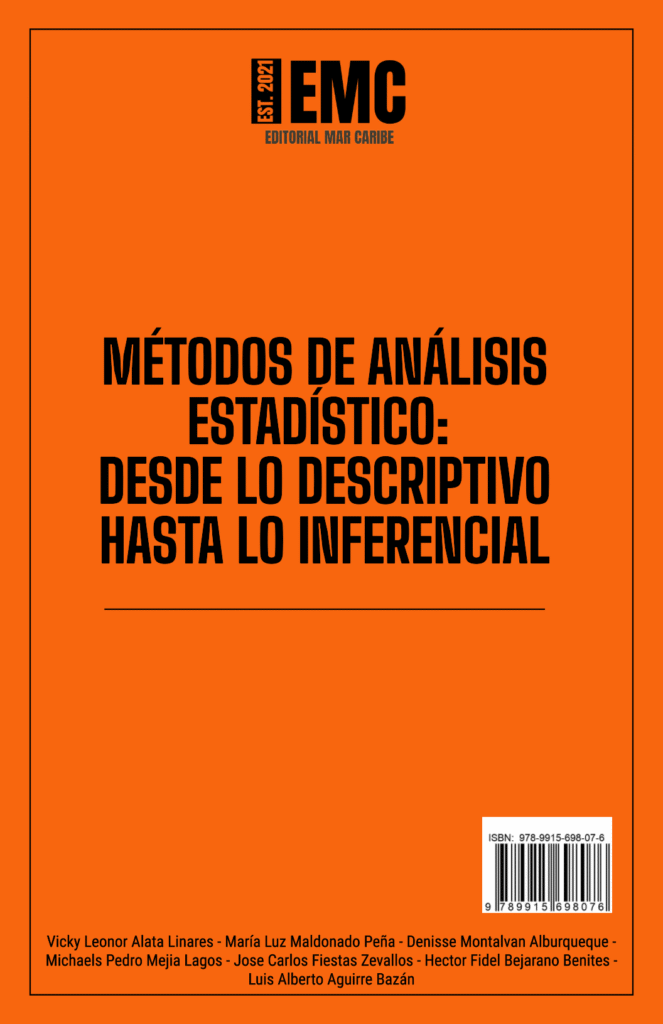
Scientific research always uses statistics, whether to obtain quantitative or qualitative information. Statistics verify individual values in a diverse population; this book emphasizes two stages: statistics of inference or description and statistics of induction or statistical connections, and thus interprets the ordering of data to verify trends, while logical statistics analyze differences in the population or sample and predict possible events. The research objective is to conceptualize descriptive and inferential statistical methods, through hypothesis testing, confidence intervals, probabilities, among others, not only to summarize and describe observed data but also to make predictions and decisions based on these data.
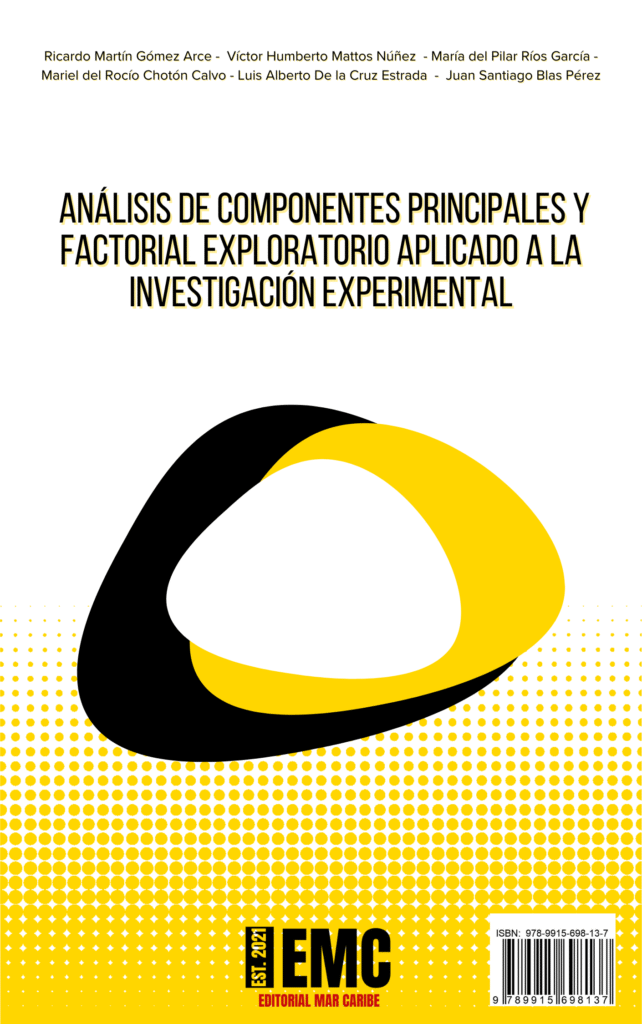
PCA seeks to reduce the dimensionality of a data set without losing a significant amount of information. This is achieved by transforming a set of original variables, which may be numerous and correlated, into a smaller set of uncorrelated variables, called principal components. Each principal component is a linear combination of the original variables and is ordered such that the first component captures most of the variance in the data, the second component captures the second largest variance, and so on. This dimensionality reduction is crucial as it facilitates data visualization, improves the efficiency of other statistical analyses, and helps to avoid overfitting problems in predictive models.
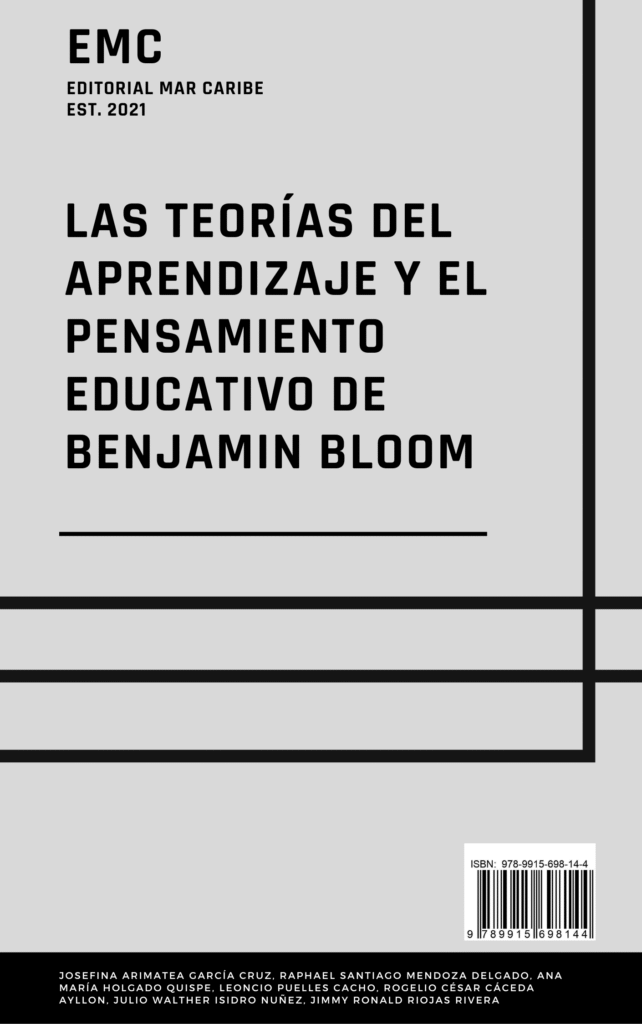
The theoretical underpinnings of Bloom’s taxonomy are found in the fields of developmental, cognitive, and educational psychology. This framework provides educators with a valuable tool for designing effective instructional strategies, promoting higher-order thinking skills, and assessing student learning outcomes. By understanding the underlying theories and concepts that inform Bloom’s taxonomy, educators can better use this framework to support student learning and achievement. At its core, Bloom’s taxonomy is based on the idea that learning is a progressive process, with each level building on the one before it.

Open Science in Latin America and the Caribbean
DATA PRESERVATION AND ENCRYPTION
All books have bibliographic DOI identifiers in collaboration with the Center for Open Science (COS), Humanities Commons, Crossref, and ARK that do not return 404 ‘Page not found’ errors, ensuring long-term access to the scientific record of the works. EMC has a long-term digital preservation plan with ARAMEO.NET for published archives in case the entity stops publishing, the link to objects associated with persistent identifiers cannot be located, or content management systems (CMS) are not available online. However, if readers wish to download the books from the digital cloud, they can access the Digital Repository.
OPEN ACCESS
OASPA and Editorial Mar Caribe provide open access to read and download digital content on the premise of making information available, without a Book Processing Charge (BPC) or Chapter Processing Charge (CPC), which fosters ethical global knowledge sharing. Open access to the publisher’s publications is governed by the CC BY-NC 4.0-Attribution-NonCommercial 4.0 International license. The books hosted in the publisher’s own repository are distributed in scientific databases through ONIX 3.0 metadata and multipurpose persistent identifiers recognized by OASPA and are embedded in indexing systems with basic quality standards.

Agreements with Universities and Research Centres
We connect researchers, centers, institutes, and universities for the management and systematization of research data.